Mostrando entradas con la etiqueta UE. Mostrar todas las entradas

domingo, 1 de septiembre de 2013

Externalidades del transporte terrestre 2/6: la polución atmosférica


Una de las consecuencias negativas del transporte terrestre es la contaminación en nuestra atmósfera con productos tóxicos. El motor de explosión interna al modificar la energía de los combustibles fósiles en movimiento también genera y emite subproductos como calor y gases que son expulsados a la atmósfera. La polución del aire producida por estos vehículos se considera un coste externo, pues sus repercusiones son asumidas fundamentalmente por quienes no las han generado. Aproximadamente una cuarta parte de la población europea vive a menos de 500 metros de carreteras que suelen tener un tráfico superior a los tres millones de vehículos al año (Libro Verde del Transporte de la UE).

sábado, 4 de agosto de 2012

Using Twitter in Public Transports (english version)


In an article published in the daily newspaper La Vanguardia by Joana Bonet titled “Burbujas con pin” (bubbles with pin), the important changes which smartphones, eBooks, ipod and other electronic devices have on our manner to communicate and to relate ourselves with other human beings are mentioned. In this article three of these changes were pointed out:


The protection these devices provide us, with regard to strangers who share the same space with us (like metro or bus stations, corridors in public installations, etc.) where “people don’t look themselves openly in the eyes any more, but take refuge in their screens”. This vision clashes frontally with the one defined by George Amar and his concept of “religance” in transportation, which has been explained in a number of articles of this blog. This term maybe responds to the multifaceted vision of a human phenomenon sufficiently complex as to explain it with a single paradigm.

Significant is the autosufficiency which we gain with the use of these devices, as we no longer have to ask a stranger how to reach a certain place or our current location. The GPS and all its applications have given us access to the immediate knowledge of our position in a system of worldwide reference. But it also has been a great progress for conjugal live, of which I can bear witness, as I’ve made a lot of kilometres on the European roads accompanied by my wife. First with a voluminous atlas and later on with the GPS receptor Tom-Tom: its many hours of stupid discussions over interpretation and execution that this little electronic commodity has spared us. It’s obvious that – although put aside – we have not abandoned the old Shell Atlas, as the technology sometimes still succumbs to various incidents which this traditional road book can endure.

And in the third place, the article highlights a new “private bubble”, expression created by the Israeli city planner Tali Hatuka to name the isolation from the phisical world, these technologies provide for us. They seduce ourselves with new forms of communication and entertainment which occupy our time, especially the time we need to move ourselves. Now we find ourselves in the strange circumstance that while travelling we can be at 20 cm of another person and easily ignore him or her. The small device creates an invisible bubble around us, which isolates us from the other passengers, more or less anonymous companions of our commute flows to and through the big metropolis.

Barcelona's underground

A few months ago I had the luck to assist to a conference organized by AMTU in Martorell, in which Sanderijn Baanders was explaining in her speech "Impact of social media in public transport. Use of Twitter in The Netherlands" some of the conclusions from the studies about the impact of the use of the social networks in the public means of transport.

Communication via internet has diversified notably: from the more conventional means as websites, newletters, electronic mails or SMS, over social networks (Facebook, Linked-In, Twitter and Youtube) until the most recent applications apps disigned for use in smartphones, as for example the QR codes. It is interesting to observe, what influence for example Twitter has on the transportation (in the conference the case of the Netherlands was explained) with the flow of information that circulates between operators with passengers and vice versa or between the passengers of public transport themselves. The speaker pointed out that depending on the kind of fluctuations, the type of information interchanged also varied. Sanderijn Baanders classified three groups of information interchange:

Of the operator to the users:
The information given in this flow of information is basically about the stops, time-schedules, news about the operating company, incidents, delays, interruptions of the service or answers to the most frequent questions of the clients.


Of the users to the operator:
The information basically refers to complaints about the service rendered by the operator, concrete or general questions, information about vandalism and to a lesser extent about suggestions for the improvement of the service.


Between the users:
The information usually are messages of sympathy, compliments and encouragements, also information interchanges about ticket controls, discussions of passengers and information about events, incidents, flash mob, even accidents that might produce themselves in the infrastructure of the transport network.


Baanders gave data of two Twitter users: @NS_online  (National Railways) Dutch train operator, now  while I'am writting this post has 46.000 followers with an average of 500 – 1.000 tweets per week and @TotalOVNL a user who informs about the ticket controls via Twitter with 11.900 followers and an average of 250 – 1.200 tweeds per week. At the end of the speech different operators present confirmed that also in Spain information systems about ticket controls to users had been detected. Nowadays, information no longer is an exclusive good for only a few, the new technologies are at the disposition of everyone (and reasonably priced); there will always be new tools for the old objectives.

Twitter is a very easy tool to use, with a rapid growth in wide sectors of the population and in which the messages send by the operators to inform their users about incidents or news related to public transport have a very good reception. Twitter is converting itself into an important information tool in comparison with the low quality of other communication means about the interruptions or incidents in the public transport. Let us keep the evolution of this tool and its utility in the mobility of the human being in mind.

Twitter user
 Twitter user

Do you think that Twitter is a threat for the ticket controls in itinere?


Licencia de Creative Commons


domingo, 15 de julio de 2012

Seis objetivos para el desarrollo de un mercado europeo del transporte

FGC
Estación intermodal de Quatre Camins


La Comisión Europea otorga una gran importancia a su estrategia para reforzar la entidad política que supone la unión del continente europeo con el desarrollo de una potente red de infraestructuras que articule su extenso territorio de  más de 4 millones de kilómetros cuadrados y una población que el año 2011 ya superaba los 502 millones de habitantes. El documento de trabajo (White Paper) Roadmap to a Single European Transport Area -  Towards a Competitive and Resource Efficient Transport Area System, es el informe más reciente que he podido leer acerca de las políticas en infraestructuras europeas. Publicado el año 2011 por la Comisión Europea, este informe destaca la importancia de las infraestructuras del transporte sobre la actividad económica; en la creación de trabajo; el impulso del comercio; la mejora en la accesibilidad geográfica y la movilidad de los bienes, servicios y personas que transitan por su territorio. El documento al que hago referencia creo que puede resultar muy interesante porque hace un esfuerzo en proyectar y en planificar la visión que la Comisión Europea  tiene del futuro sistema de transporte europeo, concretando las grandes líneas operativas a desarrollar en los próximos años, que pueden agruparse en 3 grandes bloques:

• En INFRAESTRUCTURAS: 

Creación de un mercado europeo del transporte sobre la base del proyecto de infraestructuras TEN-T que reducirá las congestiones actuales de tráfico y mejorará sustancialmente la accesibilidad por todo el territorio europeo a pequeña y mediana escala (continental y regional).

• En ENERGIA: 

Reducción de la gran dependencia que tiene el sistema de transporte europeo del petróleo y visualización de nuevas contingencias frente a la previsible escasez de combustibles fósiles en un futuro próximo (Peak oil). En el informe se destaca el dato que en el año 2010 la factura de las importaciones de petróleo en la Unión Europea fueron alrededor de 210 mil millones de €.

• En MEDIOAMBIENTE: 

Reducción de la generación de gases de efecto invernadero que disminuyan las consecuencias del cambio climático.

Cuando este documento entra en detalle para cada uno de los tres grandes bloques se plantean metas muy concretas para las próximas cuatro décadas, hasta llegar al horizonte del año 2050, que  he agrupado en 6 grandes objetivos como indica en el título de esta entrada. 


1. Reducción de los gases de efecto invernadero en un 60% antes del 2050 para todo el sistema de transporte. Con un hito intermedio en el año 2030 para alcanzar el 20% de reducción de estos gases respecto a los producidos en el año 2008.

2. Cambio del modelo de transporte. Desarrollo de vehículos mucho más limpios, potenciación de los transportes colectivos, donde el transporte individual se utilizará esencialmente para “la última milla” de los desplazamiento, creación de líneas de ferrocarril de alta velocidad y corredores ferroviarios para el trasporte de mercancías especializados en las medias distancias, permitiendo una movilidad sin costuras sobre el territorio con una buena intermodalidad entre los diferentes medios de transporte. Un cambio de modelo de transporte basado en el uso intensivo de la tecnología, no sólo para mejorar las transferencias entre los diversos modos de desplazamiento, sino para mejorar sus infraestructuras (ITS, SESAR, ERMTS, SafeSeaSafety, RIS…) y alcanzar con este modelo la suficiente economía de escalas que permita la aparición de operadores logísticos multimodales y multinacionales.

3. Creación de una red multimodal de transportes entre las principales ciudades de la Unión, con corredores ferroviarios y de autopistas, potenciando el carácter intermodal de los puertos marítimos y de aguas interiores y conectando la red del ferrocarril de alta velocidad con la red de aeropuertos europea.  Creación de un espacio aéreo único europeo, creación de un espacio ferroviario único y creación de un "cinturón azul" para la red europea de trayectos marítimos cortos.

4. Implantación de un transporte urbano sostenible, utilizando planes de movilidad en las ciudades o en las empresas y grandes instalaciones públicas, la utilización de billetes de transporte inteligentes y sistemas tarifarios por áreas y no según los medios de transporte que se utilicen, el car-sharing, los sistemas de park&ride cerca de grandes intercambiadores, la potenciación de la movilidad activa (caminar o ir en bici) y armonizar los movimientos de tráfico pendulares por movilidad obligada en las grandes áreas metropolitanas.

5. Mantener a la Unión Europea en el liderazgo mundial de la seguridad vial y laboral del transporte, desarrollando las políticas de seguridad, responsabilidad, accesibilidad y calidad de los servicios y puestos de trabajo en el sector del transporte y la logística. La UE tiene como objetivo reducir a la mitad el número de víctimas en las carreteras hacia el año 2020 y llegar a cero muertes a consecuencia del tráfico en el 2050.

6. Internalización de los costes del transporte. Los costes a escala global mediante la aplicación de tasas sobre el uso de la energía y la creación de un mercado de emisiones de gases efecto invernadero. Para los costes a escala local (ruidos, polución y congestión del tráfico) se establecerán “peajes” por el uso de las infraestructuras y se realizarán cambios fiscales en el sector bajo la premisa de que quienes contaminan pagan. Se establecen dos fases, la primera hasta el año 2016 en la que se revisarán las tasas aplicadas a las ventas de vehículos con motores de combustión: por una parte la aplicación de la directiva euroviñeta
quienes lo usan, lo pagan y por otra modificando el hecho imponible de algunos tributos destacando el impacto ambiental que produzcan para discriminar positivamente a los vehículos más limpios. En una segunda fase (2016-2020) se consolidará esta política tributaria y también se internalizarán los costes por polución y ruidos en puertos y aeropuertos.

Obviamente el documento es mucho más extenso y los más interesados en estos temas pueden acceder al original a través del enlace que he puesto al inicio.

Con la crisis a través de los medios de comunicación nos llegan “globos sonda” de nuevos recortes y cambios en la fiscalidad aplicados a diversos aspectos de nuestra movilidad (un derecho que deben vigilar nuestros gobiernos). Muchas de estas medidas que nos anuncian son algo más que simples rumores provocados por gobiernos agobiados económicamente, pues forman parte de una estrategia diseñada desde Bruselas para alcanzar el cambio de modelo para nuestro sistema de transporte y movilidad, frente al que los gobiernos nacionales tienen poco margen de maniobra (por ejemplo retrasar la adopción de medidas como la euroviñeta, caso de España, o bien modificar los niveles de tributación que se pueden aplicar en diferentes tributos). Cada vez tendremos que estar más pendiente por todo lo que suceda en Bruselas, pues lo que allí pase será más importante que lo que se esté legislando en cualquiera de las capitales de los Estados miembros de la Unión.


Licencia de Creative Commons


Otros artículos relacionados:


sábado, 14 de julio de 2012

Six goals for the european transport market development (english version)

Intermodal station
Intermodal station "Quatre Camins"


The European Commission puts great importance in its strategy to strengthen the political body, which is the union of the European continent, with the development of a potent infrastructure network to join its vast territory of more than 4 million m2 and a population which already surpassed 502 million inhabitants in the year 2011. The working document:  (White Paper) Roadmap to a Single European Transport Area - Towards a Competitive and Resource Efficient Transport Area System, is the most recent report which I was able to read about European infrastructure. Published in 2011 by the European Commission, this report highlights the importance of transport infrastructures for the economic activity: for job creation, the stimulus of Commerce, the improvement of geographic accessibility and the mobility of goods, services and persons which travel through its territory. I think the mentioned document might be quite interesting because of its proposition to project and plan the European Communities’ vision of the future European transport system concretizing the major operative lines to be developed in the next years, which can be classified in three big blocks:

INFRASTRUCTURES:   
Creation of a European transport market on the basis of the infrastructures project TEN-T, the objective of which is the reduction of the current traffic congestions and a substantial improvement of the accessibility to the whole European territory on a small and medium scale level (continental and regional).

ENERGIES:
Reduction of the big dependability of the European transport system on petrol and the design of new contingencies for the foreseeable scarcity of fossil fuel in the near future (Peak oil). In the report the following fact is pointed out: In 2010 the imports of petrol to the European Union amounted to approx. 210 billions. €.

ENVIRONMENT:   
Reduction of the greenhouse gases in order to minimize their effect on the climatic change.

This document proposes quite concrete actions for each of these three fields for the next four decades (comprising a horizon until the year 2050) which I tried to classify in the following 6 major goals as indicated at the beginning: 


1. Reduction of the greenhouse gases by  60 % before 2050 for the complete transport system, with the milestone to reach a reduction of 20 % in 2030 in comparison to the emissions produced in 2008.

2. Change of the transport model: Development of considerably cleaner vehicles, a strengthening of the collective transport where the individual transport only will be used as the “last mile” of the journeys, creation of high speed train lines and corridors for the rail transport of special goods at medium range, thus enabling a sutureless mobility within the territory with a good intermodality between the different means of transport. A change of the transport model based on the intensive use of technology, not only to improve the transfers between the different modes of transport, but also in order to improve its infrastructures (ITS, SESAR, EMTS, SafeSeaSafety, RIS…) and in order to reach with this model a level of economy of scales that permits the apparition of multimodal and multinational logistic operators.

3. Creation of a multimodal transport network between the major cities of the European Union, with train corridors and motorways, by strengthening the intermodal character of the sea ports as well as of interior waterways and by connecting the high speed train network with the European airport network. The creation of a unique European airspace, the creation of a unique train space and the creation of a “blue belt” for the European network for short distance sea shipping.

4. Implantation of a sustainable urban transport system, by using mobility plans in the cities or in the companies and big public installations; by introducing intelligent transport tickets and by using tariff systems by areas and not by mode of transport, by car-sharing, Park & Ride systems near big connecting stations, by potentiating active mobility (like walking, biking,…) and by harmonizing movements of the commuter traffic in the big metropolitan areas.

5. Maintaining the European Union as world leader for road and labour security, by the development of politics of security, responsibility, accessibility and quality of the services and working places in the transport and logistics sector. The European Union has the objective to reduce the number of traffic victims by half until the year 2020 and to reach 0 deaths by traffic accidents in 2050.

6. Internalization of transport costs. Costs on a global scale with the raising of taxes for energy use and with the creation of a market of the emission of greenhouse gases. For the costs on a local scale (noise, pollution and high traffic accumulation) a “toll” for the use of the infrastructures will be introduced and fiscal adaptations in the sector will be made according to the prerequisite: “who pollutes, pays”. This will be established in two phases: In the first phase until 2016, the taxes applied to the sales of cars with combustion engines will be revised. This means, on the one hand, the application of the regulation of the “Eurovignette” (road tax disc) – “who uses, pays” and on the other hand the modification of some of the tributes (those that allow for it) by highlighting the environmental impact they produce to discriminate positively the cleanest vehicles. In a second phase (between 2016 – 2020) this fiscal policy will be consolidated and the costs for pollution and noise level of the harbours and airports will be included. Obviously this document is a lot more extensive and those interested in its content can access to the original via the link which I mentioned at the beginning.

With the ongoing crisis we are informed “through the grapevine” by the media of new reductions and fiscal changes applied to different aspects of our mobility (a right our governments should preserve for us). Many of those measures are more than simply rumours, provoked by economically burdened Governments, and are part of a strategy designed by Brussels to achieve the change of model for our transport and mobility system, which leave little manoeuvring space to the national governments (such as for example delay of measures like the introduction of the “Eurovignette” (Euroviñeta), in the case of Spain, or the modification of the contribution levels which can be applied in different fees). We’ll have to be more and more aware of what is happening in Brussels, as what is decided there, will be more important than what is being legislated in any of the capitals of the member states of the European Union.


Licencia de Creative Commons


jueves, 8 de marzo de 2012

¿Qué políticas de la Unión Europea potencian la intermodalidad de los transportes?


Intermodalidad transporte de mercancías
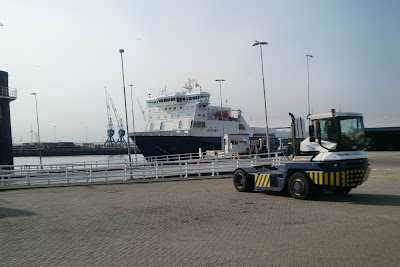
La intermodalidad está muy desarrollada en los puertos holandeses.
La fotografía es del Puerto de Róterdam


La Unión Europea hace años que intenta potenciar el transporte intermodal. Las políticas que surgieron en el año 2001 se orientaron en traspasar una parte de las mercancías del tráfico por carretera a la red ferroviaria, sin embargo con el tiempo se vio que no tenía sentido forzar la realidad, pues lo que se estaba generando era una desconfianza y una competencia entre los dos modos de transporte que impedían crear las sinergias necesarias para el buen desarrollo del transporte intermodal. La comodalidad ha sido un intento de avanzar en la idea de un sistema de transporte que utilice todos los modos disponibles de una forma económica y medioambientalmente respetuosa. El foco de estas políticas ya no está en qué modo hay que potenciar, sino en el análisis de los itinerarios y de los modos más eficientes y eficaces que permitan un transporte rentable y sostenible según sea el camino elegido.

En los últimos diez años hemos tenido diversas directivas europeas que han tratado de potenciar el transporte intermodal sin demasiado éxito por el momento. Las directivas 96/48CE y 2001/16/CE trataron de activar la interoperabilidad del sistema ferroviario transeuropeo de alta velocidad y del ferrocarril convencional. En ellas se fijaban las condiciones para lograr una circulación segura y continuada de trenes; con unos rendimientos competitivos y sin grandes diferencias reglamentarias, técnicas ni operativas, entre los países europeos. Los intentos que hemos tenido en Europa para liberar el mercado internacional del transporte ferroviario no han recibido el suficiente apoyo de todos los Estados de la Unión. La Comisión Europea ha expedientado recientemente a varios Estados por este motivo. El primer paquete de medidas planteado por la UE estaba formado por tres directivas que obligaban a abrir la competencia en el mercado ferroviario de mercancías. Su plazo expiró el año 2003. Este paquete de medidas obligaba a los Estados miembros a garantizar el derecho de acceso a los servicios internacionales de la red transeuropea de transporte terrestre RTE-T. Ya en el año 1996 la UE tomó la decisión 1692/96/CE por la que se creaba la red transeuropea del transporte y se declararon de “interés europeo” 30 proyectos.

Los proyectos de inversión RTE-T que afectaron a España propuestos por la Comisión Europea fueron:

  • Proyecto 3.  Ejes ferroviarios de alta velocidad en el suroeste de Europa.
  • Proyecto 8. Ejes multimodales Portugal/España – resto de Europa.
  • Proyecto 15. Red GALILEO. Tecnología de navegación por satélites para el posicionamiento y la sincronización de servicios diversos en Europa.
  • Proyecto 16. Eje ferroviario de mercancías Sines/Algeciras – Madrid – París.  (Por la Travesía Central Pirenaica).
  • Proyecto 19. Interoperabilidad ferroviaria de alta velocidad en la Península Ibérica. El objetivo fundamental era(es) superar el problema del ancho de vía ibérico con la construcción de nuevas vías de ancho europeo.
  • Proyecto 21. Autopistas del mar. Europa occidental, SE de Europa y el Mediterráneo.

Si revisamos estos proyectos veremos que la mayoría de ellos se han ejecutado parcialmente, incluso algunos tienen un considerable retraso, pero son sustanciales en la estructuración de la red intermodal peninsular.

El nuevo reglamento europeo 913/2010, del 22 de septiembre del 2010, define los corredores ferroviarios europeos y sus órganos de gestión. En ese reglamento destacaría la definción que se hace de los consejos de administración de los corredores europeos los cuales se superpondrán sobre los gestores estatales de las infraestructuras ferroviarias, para conseguir la coordinación necesaria en su interoperatividad, un paso adelante en la potenciación del transporte ferroviario europeo y la intermodalidad. De todas las rutas que aparecen en el anexo de este reglamento hay que destacar la ruta número 4 (por el Atlántico) y la ruta número 6 (por el Mediterráneo), estableciendo como fecha límite de su funcionamiento el 10 de noviembre del 2013. Ambas afectan al territorio peninsular y están en consonancia con los proyectos de la Red de Transportes Europea. 

Desde el año 2004  la asociación multisectorial FERRMED, una iniciativa del sector privado, trabaja con el objetivo de contribuir en la mejora del transporte de mercancías en Europa. Esta asociación tiene propuestas muy diversas, por ejemplo la aplicación de unos estándares en la red ferroviaria que hacen referencia: al voltaje, el ancho de vía, los gálibos de túneles y puentes, los sistemas ERTMS de señalización y gestión del tráfico, etc., también proponen el diseño de nuevos conceptos de locomotoras y vagones, incluso plantean mejoras tecnológicas para realizar acoplamientos automáticos entre vagones. Aspectos todos estos que abrirán el camino a nuevas soluciones automatizadas en la gestión de las terminales intermodales. Este lobby ha conseguido el apoyo de la propia Unión Europea y de varios Estados miembros. La gran apuesta de FERRMED es la creación de un eje ferroviario que desde Escandinavia llegue hasta los límites del Mediterráneo occidental, pasando por las áreas centrales europeas del Rin y del Ródano. En el ámbito español es uno de los principales defensores del corredor del Mediterráneo.

La Unión Europea está actualizando los anteriores proyectos de inversión RTE-T, en donde ya se han recogido muchas de las reivindicaciones que ha planteado la asociación FERRMED. Confiemos que la Comisión Europea adopte aquellos proyectos apoyados por los Estados miembros que mejor se adapten a unos parámetros de eficiencia económica y sostenibilidad ambiental que justifiquen inversiones tan importantes en tiempos de crisis. En España, como siempre, el gran problema será lidiar con las tensiones interterritoriales para llegar a Bruselas con un acuerdo consensuado.


Related Posts Plugin for WordPress, Blogger...